UV
phototherapy light technical information
Phototherapy is the process of treating the human body with
various wavelengths of light such as laser, ultra violet or
infra red. Different wavelengths and intensities offer
medically proven treatment for chronic skin conditions.
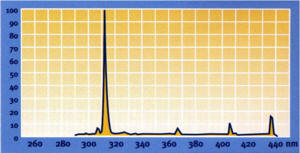
Dermalight products solve the problems of over-exposure to
ultraviolet light by maximizing the delivery of narrow-band UVB
radiation (in the 311-312nm range, the most beneficial component
of natural sunlight) while minimizing exposure to superfluous
UV. This allows patients to receive phototherapy treatments with
less risk of severe burning or pathogenic exposure to more
harmful wide band radiation ranges. UVB narrow-band also avoids
the adverse side effects of the psoralen drugs used in
conventional PUVA therapy, since UVB treatment requires no
supplemental drugs.) These therapeutic benefits have made the
Dermalight products the fastest-selling phototherapy units in
Australia, the UK, Europe and now America. UVB treatment is
around 83% successful and narrow band UVB treatment is around
90% successful, or 95% when used in conjunction with a coal tar
product. We suggest that you personally ascertain if you respond
to UV treatment via consultation with your doctor, modest
exposure to the sun or have already undertaken a successful
course of UV treatment.
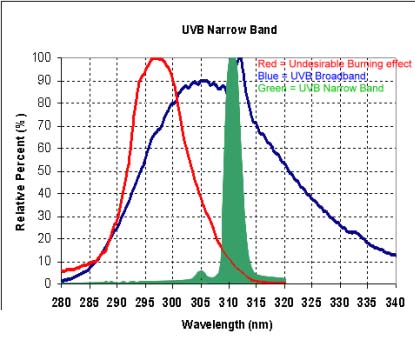
Clinical studies show the peak therapeutic effectiveness
of UVB to be within the 295-313nm range but wavelengths
below 300nm are more likely to cause erythema or severe
burning and increase the risk of skin cancer. Narrow band
UVB is in the 311-312nm range, and therefore does not emit
the more dangerous wide spectrum that includes wavelengths
of 280-300nm and above 330nm.
Because wavelengths below 300nm are eliminated UVB narrow
band therapy times can be increased more safely, so patients
can derive the maximum benefit from phototherapy. The
increase effectiveness permits more aggressive treatment
regimens, resulting in a shorter course of treatment.
Extensive research confirms that patients not only avoid the
danger of serious burning from sub-erthemal exposure, they
may also enjoy longer remission periods after treatment.
Remission periods are similar to those with PUVA therapy
and markedly superior to road-band UVB treatment. Studies
show 38-40 percent of narrow band patients require no
additional therapy for at least 12 months.
Narrow Band UVB light is at a wave length of 311nm, most
other products emit the older, more dangerous radiation in
the wide band spectrum. Narrow band UVB is much safer than
full spectrum UVB, and the output is reduced by well over
97%. Narrow band UVB is the exact wave length that psoriasis
responds to best. Why bombard your skin with unneeded light
radiation? Even many UVB products in hospitals are older
style, full UVB spectrum products as they are often many
years old. If you imagine sun exposure to natural sunlight
is equal to 100% UV radiation exposure, using a narrow band
UV light is roughly 1% UV radiation exposure (powerful and
targeted treatment.)
All our products use premium medical quality globes and
the best possible component that are available today. We
offer a full range of products that provide combined wide
band UVA & UVB or exclusively Narrow Band UVB 311nm.
UVB or UVA ??*
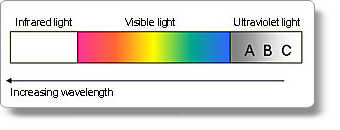
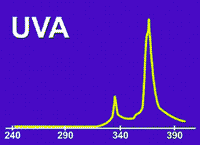
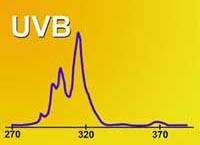
Natural sun light is made up of two different wavelengths
of ultraviolet (UV) light: UVA and UVB. In contrast, sun
beds usually contain high levels of mainly UVA rays. Since
the common misconception is that UVB light can burn and
damage skin, it is a FALSE understanding that UVA tanning
beds and salons are safe. In fact, UVA light penetrates much
deeper into the skin that than UVB rays, damaging elastic
fibbers that keep the skin supple. UVA rays also make the
skin more vulnerable to the effects of UVB, so using a sun
bed means that you'll be more likely to burn when you're
exposed to natural sunlight for the next 7-10 days. UVB
light can burn skin from over exposure (just like natural
sunlight can) but it is the SAFEST part of the UV light
spectrum and clinically proven as an effective treatment for
many skin conditions. Used in moderation and according to an
approved treatment program UVB is a highly effective and
SAFE treatment as recommended by a leading international
psoriasis foundation. *Source Top Sante Magazine August
2002.
what about skin cancers?
The risk for psoriasis patients on a life
long UVB treatment will probably be of the same order of
magnitude as for outdoor workers. In comparison with other
every day risks, the risk of dying from a skin cancer seems
to be negligible. Regular check-ups by a dermatologist can
reduce this risk close to zero.
It would be unethical to say there is absolutely no risk
of skin cancer. Most treatments today have some form of side
effect, even the common aspirin and pain killers can have
drastic affects such as causing liver damage, although very
rare. The possibility of side effects are minimized by
following the recommended guidelines. The possible side
effects need to be considered before undertaking any form of
treatment. It is important to know that there is no single
proven case of narrow band UV phototherapy causing skin
cancer, although it is known UV can cause skin cancer. We
have several independent documents in our web forum that
discuss cancer involved with UV. Furthermore, skin cancers
can appear any place on the body, even the soles of the feet
and arm pits that have obviously not been exposed to UV
radiation, therefore it is highly likely that some people
are simply predisposed to skin cancer. |